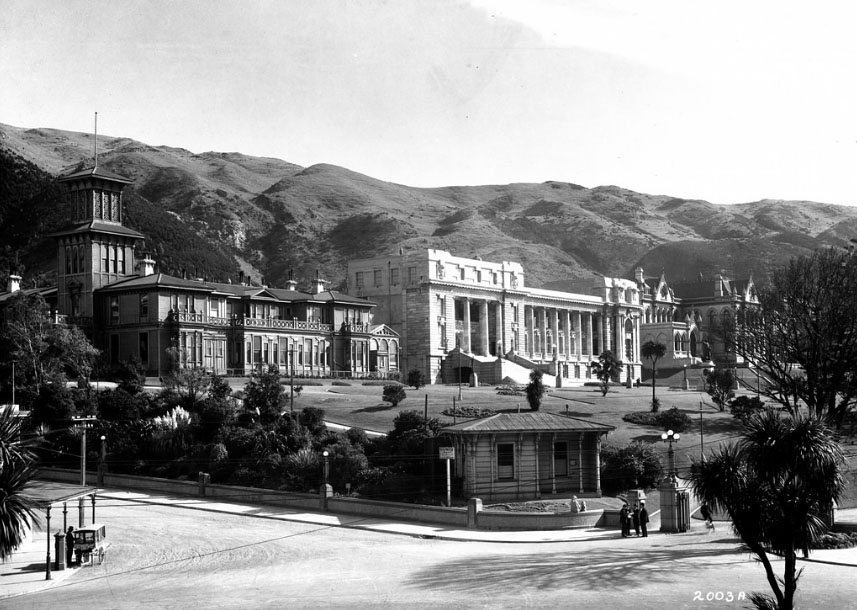
The land on which Parliament Grounds sit has a long history of human occupation. When Ngāti Mutunga, Ngāti Tama and Te Āti Awa, moved from Taranaki to escape rising uncertainty, Te Whanganui-a-Tara (Wellington Harbour) was occupied by hapū of Ngāti Ira and other iwi. The Taranaki hapū occupied the western coast of the harbour and Ngāti Mutunga established Pipitea Pā at Haukawakawa in 1824, the gardens of which extended to what is now Parliament Grounds. As colonial Wellington grew, Māori were pressured to move further from the central town. After New Zealand’s capital was moved from Auckland to Wellington in 1865, wooden Parliamentary Buildings were built and they served until 1907 when they were destroyed by fire. This presented the Government with an opportunity to express the country’s rise in constitutional status from colony to dominion through architecture and in 1911 a competition was held for the building’s design.
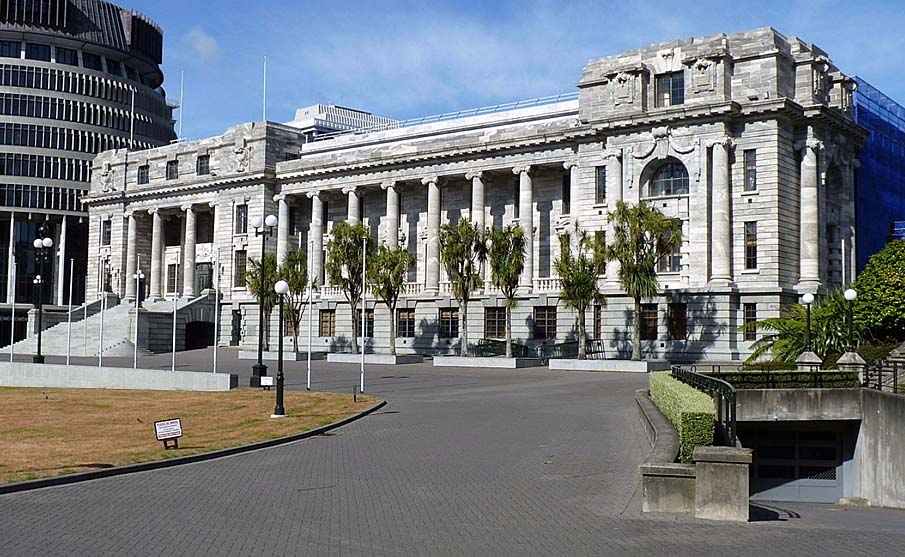
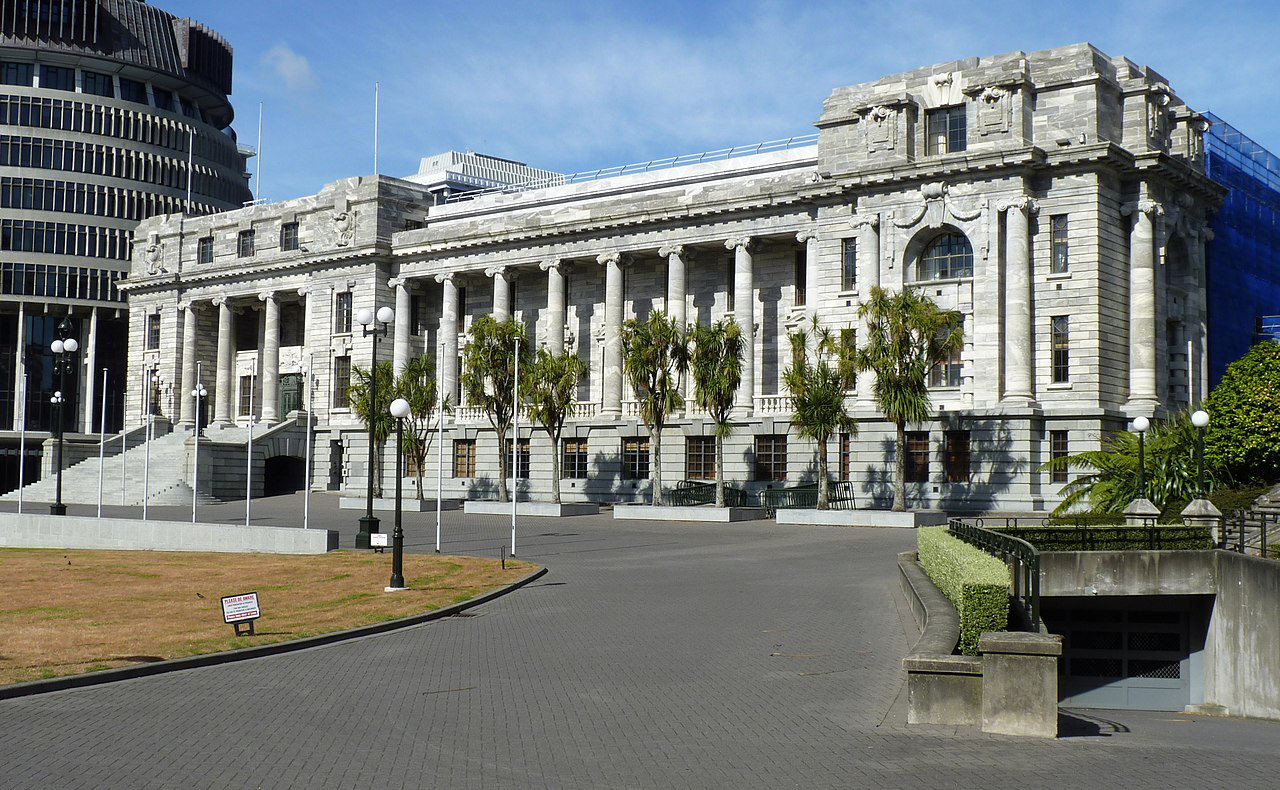
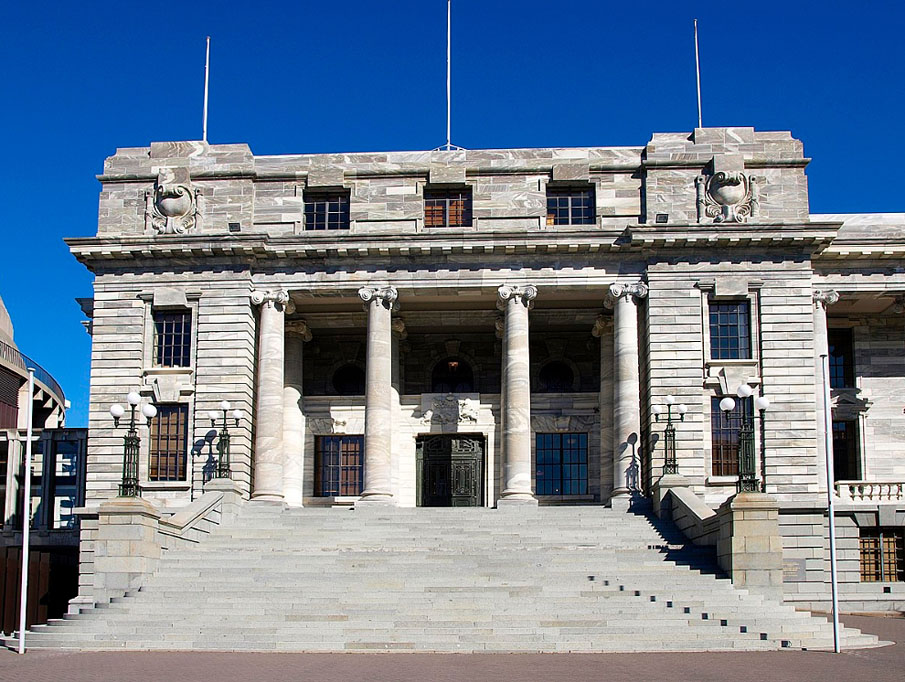
The winner was the New Zealand Government Architect, John Campbell, with a member of his staff, Claude Paton, and the resulting plans drew upon both this winning design and Campbell’s other design, with Charles Lawrence, which had come fourth. By the time the foundation stone was laid in 1912, cost-cutting deferred the southern wing. Shortages of labour and materials during the First World War delayed construction and it wasn’t until 1922 that the building and redesigned grounds were completed, although the Debating Chamber held the first sitting of the House of Representatives on 24 October 1918. The building was clad in Kairuru marble and Coromandel granite, signifying permanence and solidity. Large marble columns dominated the façade and the official entrance was reached by steps topped with ornamental bronze gates.
Over subsequent decades, the three parliamentary buildings became dilapidated, earthquake prone, and unable to accommodate increasing members and modern services. Options considered included completing Parliament House as originally planned, even after the Executive Wing (1969-1981) was built to provide additional accommodation. Instead, a three-year project to strengthen and refurbish Parliament House began in 1992. Key rooms and their significant heritage features were restored and new spaces were created, such as a Galleria in what was previously an open courtyard between two pavilions and a conservatory. The Māori Affairs Committee Room (Matangireia), opened in 1922, was the only architectural expression of Māori engagement in the processes of political decision-making until Te Kāhui Mōuri was unveiled in 2023. A larger Māori Affairs room (Māui Tikitiki-a-Taranga) was opened in 1996 in a more prominent part of the building, followed by the Pacific Room (2002), Women’s Suffrage Room (2020), and Rainbow Room (2008), the latter being the ‘physical embodiment of the Crown’s commitment to diversity LGBTIQAP+ rights.’
These symbols of unity at times contrast with onsite public petitions and protests that focus on proposed legislative changes, including homosexual law reform, civil unions, and a 23-day occupation of the grounds in 2022 in response to the Government’s COVID- 19 protection measures. Reopened on 23 June 2022, New Zealand’s Parliament Grounds remain one of the few internationally that are open to the public. Frequently used as a park, the grounds are also a place for the public to express their views and participate in public affairs, a key part of representative democracy.
List Entry Information
Status
Listed
List Entry Status
Historic Place Category 1
Access
Able to Visit
List Number
223
Date Entered
20th July 1989
Date of Effect
20th July 1989
City/District Council
Wellington City
Region
Wellington Region
Extent of List Entry
Extent includes part of the land described as Sec 1 SO 38114 (RT 10240), Wellington Land District and the building known as Parliament House thereon, including the grounds. (Refer to the extent map tabled at the Heritage List / Rārangi Kōrero Committee meeting on 12 November 2015).
Legal description
Sec 1 SO 38114 (RT 10240), Wellington Land District
Status
Listed
List Entry Status
Historic Place Category 1
Access
Able to Visit
List Number
223
Date Entered
20th July 1989
Date of Effect
20th July 1989
City/District Council
Wellington City
Region
Wellington Region
Extent of List Entry
Extent includes part of the land described as Sec 1 SO 38114 (RT 10240), Wellington Land District and the building known as Parliament House thereon, including the grounds. (Refer to the extent map tabled at the Heritage List / Rārangi Kōrero Committee meeting on 12 November 2015).
Legal description
Sec 1 SO 38114 (RT 10240), Wellington Land District
Why is this place significant?
Historic Significance
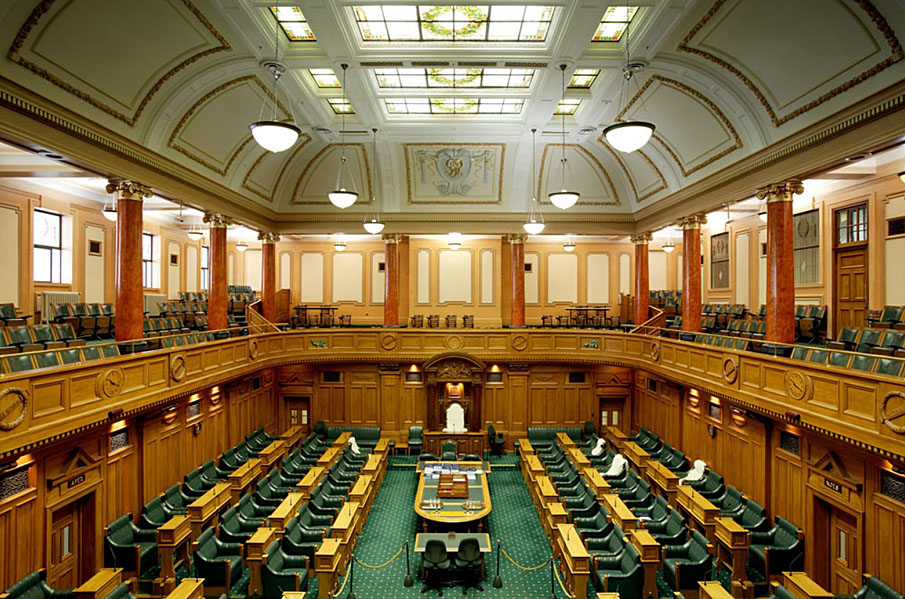
Historical Significance or Value The Competition: John Campbell produced sketch plans for a new Parliament House in 1908: one for the restoration of the old Parliament House in the Gothic idiom and another for the construction of new Parliament House in the classical idiom. The sketch plans provided a rallying point for those architects and politicians who argued that a competition should be held for the design of a new building. However, when the conditions of the competition were made available in February 1911 they fuelled rather than dampened the controversy over the buildings. They differed in two important ways from competition regulations formulated by the Royal Institute of British Architects and adopted, in slightly modified form, by the New Zealand Institute. (1) Although RIBA regulations stated that the name of the assessor should be announced in the original advertisements for a competition the government refused to disclose who the judge of New Zealand's competition would be. (2) RIBA regulations stated that: "no Promoter of a Competition, and no assessor engaged upon it, nor any employee of either, shall compete OR ASSIST A COMPETITOR, or act as Architect, or joint Architect, for the proposed work." Thus Campbell and other State employees should have been excluded from the competition. Protest against the competition conditions was led by Samuel Hurst Seager, lecturer at Canterbury College. The Government refused to alter the competition conditions and much to the chagrin of the Institute Campbell entered, apparently producing one entry with Claude Paton and another with Charles Lawrence. The furore over the competition was the first test of the cohesion of the New Zealand Institute of Architects as a national body. Formed just six years before the competition, the NZIA was an affiliation of various local associations. Six architects in fact resigned their membership of the Institute over the competition and Campbell's membership also lapsed. HISTORICAL SIGNIFICANCE: There is a combination in the Parliament House of all the functions of Parliament and those of a centre of administration. When the main building was planned provision was made for a number of Ministerial Rooms as well as chambers and offices of Parliament. This relieved congestion in the old wooden Government Buildings on Lambton Quay with the transfer of the Ministry occurring between 1918 and 1922. Different aspects of New Zealand's Parliamentary history are recorded in the physical structure of Parliament House. One of the most significant parts of this history relates to the Legislative Council and its abolition. The former Legislative Council Chamber is now used exclusively for the formal openings of Parliament, but until 1950 it was the place where the members of the Legislative Council, the Upper House of the General Assembly, met. The history of the Legislative Council's abolition itself provides an interesting background to the role of this room. S G Holland's private members' bill, entitled the Legislative Council Abolition Bill, was introduced into Parliament in 1947 and precipitated the adoption of the Statute of Westminster. In Britain, at the same time, an Act was passed giving New Zealand full powers to amend its constitution. Though Holland's bill was lost in 1947, he wasted no time in addressing the issue again in 1949 when he came into power. A further Legislative Council Abolition Bill was introduced, this time in the Council, and was passed by both Houses coming into force in 1951, making New Zealand into one of the very few democracies with a single chamber legislature. The Old Legislative Council Chamber remains as a reminder of the earlier bicameral era. The building of Parliament House also coincided with the disintegration of the Liberal Party, so that after 1919 (until 1936 when the National Party was formed) members of the Coalition Reform and National Political Federation sat in this house. The Labour PArty was not formed until July 1916 (to unite the two parties and independents representing Labour in the house) - thus the history of Parliament House is inextricably connected to the history of our present two main political parties. Twenty-two ministries have been associated with Parliament Buildings to date. Some of the outstanding events have been the appearance of women in Parliament (1933) and the broadcasting of proceedings and Royal opening in 1954.
Physical Significance
ARCHITECTURAL SIGNIFICANCE: The competition for the design of a new Parliament House held in 1911 was arguably the single most important architectural event in New Zealand in the early twentieth century. Its importance lies in both its political ramifications within the architectural profession in New Zealand and the nature and quality of the designs produced. Architectural Significance of the Design: The design which was built is an amalgam of the one created by Campbell and Paton and the other created by Campbell and Lawrence. It is entirely in keeping with the architectural thinking of the period. The other competition designs make it clear that by 1911 the Imperial Baroque style of the design was accepted as the most suitable for Parliament Buildings. The Otago Daily Times reported that only two of the competition entries were in the Gothic idiom. Those designs were presumably George Troup and William Gray Young's fifth placed entry with its central tower and entrance porch modelled on Giles Gilbert Scott's Liverpool Cathedral (begun in 1903), and Alex Douglas Spier's unplaced design which has a long Gothic range enlivened by towers, and inspired by the Palace of Westminster. The preponderance of Imperial Baroque designs testifies to the influence of architectural journals and overseas experience in spreading that style to New Zealand as well as the appropriateness of Campbell's choice of style. Campbell's Baroque design is therefore indicative of the state of New Zealand architecture. By architectural reference to the great Imperial Baroque architecture of Wren and Hawksmoor Campbell alludes to the British origins of New Zealand's system of Government. His design is also comparable with other Parliament Houses erected throughout the British Empire. TOWNSCAPE/LANDMARK SIGNIFICANCE: Situated on 'the hill', the marble clad facade of Parliament House has a long ancestry which takes in many of the classical Parliament Houses of the world. In fact its ancestry stretches back to the Acropolis. Together with the French influence in the design (evident in the Beaux-Arts axial planning and the similarities between the main elevation and the design of the East Front of the Louvre) the siting of the building on 'the hill' emphasise New Zealand's commitment to democracy, if not the republicanism of ancient Greece or modern France. It makes a very impressive statement in the streetscape and certainly is a landmark in Wellington. It is well-known to all New Zealanders.
Why is this place significant?
Historic Significance
Historical Significance or Value The Competition: John Campbell produced sketch plans for a new Parliament House in 1908: one for the restoration of the old Parliament House in the Gothic idiom and another for the construction of new Parliament House in the classical idiom. The sketch plans provided a rallying point for those architects and politicians who argued that a competition should be held for the design of a new building. However, when the conditions of the competition were made available in February 1911 they fuelled rather than dampened the controversy over the buildings. They differed in two important ways from competition regulations formulated by the Royal Institute of British Architects and adopted, in slightly modified form, by the New Zealand Institute. (1) Although RIBA regulations stated that the name of the assessor should be announced in the original advertisements for a competition the government refused to disclose who the judge of New Zealand's competition would be. (2) RIBA regulations stated that: "no Promoter of a Competition, and no assessor engaged upon it, nor any employee of either, shall compete OR ASSIST A COMPETITOR, or act as Architect, or joint Architect, for the proposed work." Thus Campbell and other State employees should have been excluded from the competition. Protest against the competition conditions was led by Samuel Hurst Seager, lecturer at Canterbury College. The Government refused to alter the competition conditions and much to the chagrin of the Institute Campbell entered, apparently producing one entry with Claude Paton and another with Charles Lawrence. The furore over the competition was the first test of the cohesion of the New Zealand Institute of Architects as a national body. Formed just six years before the competition, the NZIA was an affiliation of various local associations. Six architects in fact resigned their membership of the Institute over the competition and Campbell's membership also lapsed. HISTORICAL SIGNIFICANCE: There is a combination in the Parliament House of all the functions of Parliament and those of a centre of administration. When the main building was planned provision was made for a number of Ministerial Rooms as well as chambers and offices of Parliament. This relieved congestion in the old wooden Government Buildings on Lambton Quay with the transfer of the Ministry occurring between 1918 and 1922. Different aspects of New Zealand's Parliamentary history are recorded in the physical structure of Parliament House. One of the most significant parts of this history relates to the Legislative Council and its abolition. The former Legislative Council Chamber is now used exclusively for the formal openings of Parliament, but until 1950 it was the place where the members of the Legislative Council, the Upper House of the General Assembly, met. The history of the Legislative Council's abolition itself provides an interesting background to the role of this room. S G Holland's private members' bill, entitled the Legislative Council Abolition Bill, was introduced into Parliament in 1947 and precipitated the adoption of the Statute of Westminster. In Britain, at the same time, an Act was passed giving New Zealand full powers to amend its constitution. Though Holland's bill was lost in 1947, he wasted no time in addressing the issue again in 1949 when he came into power. A further Legislative Council Abolition Bill was introduced, this time in the Council, and was passed by both Houses coming into force in 1951, making New Zealand into one of the very few democracies with a single chamber legislature. The Old Legislative Council Chamber remains as a reminder of the earlier bicameral era. The building of Parliament House also coincided with the disintegration of the Liberal Party, so that after 1919 (until 1936 when the National Party was formed) members of the Coalition Reform and National Political Federation sat in this house. The Labour PArty was not formed until July 1916 (to unite the two parties and independents representing Labour in the house) - thus the history of Parliament House is inextricably connected to the history of our present two main political parties. Twenty-two ministries have been associated with Parliament Buildings to date. Some of the outstanding events have been the appearance of women in Parliament (1933) and the broadcasting of proceedings and Royal opening in 1954.
Physical Significance
ARCHITECTURAL SIGNIFICANCE: The competition for the design of a new Parliament House held in 1911 was arguably the single most important architectural event in New Zealand in the early twentieth century. Its importance lies in both its political ramifications within the architectural profession in New Zealand and the nature and quality of the designs produced. Architectural Significance of the Design: The design which was built is an amalgam of the one created by Campbell and Paton and the other created by Campbell and Lawrence. It is entirely in keeping with the architectural thinking of the period. The other competition designs make it clear that by 1911 the Imperial Baroque style of the design was accepted as the most suitable for Parliament Buildings. The Otago Daily Times reported that only two of the competition entries were in the Gothic idiom. Those designs were presumably George Troup and William Gray Young's fifth placed entry with its central tower and entrance porch modelled on Giles Gilbert Scott's Liverpool Cathedral (begun in 1903), and Alex Douglas Spier's unplaced design which has a long Gothic range enlivened by towers, and inspired by the Palace of Westminster. The preponderance of Imperial Baroque designs testifies to the influence of architectural journals and overseas experience in spreading that style to New Zealand as well as the appropriateness of Campbell's choice of style. Campbell's Baroque design is therefore indicative of the state of New Zealand architecture. By architectural reference to the great Imperial Baroque architecture of Wren and Hawksmoor Campbell alludes to the British origins of New Zealand's system of Government. His design is also comparable with other Parliament Houses erected throughout the British Empire. TOWNSCAPE/LANDMARK SIGNIFICANCE: Situated on 'the hill', the marble clad facade of Parliament House has a long ancestry which takes in many of the classical Parliament Houses of the world. In fact its ancestry stretches back to the Acropolis. Together with the French influence in the design (evident in the Beaux-Arts axial planning and the similarities between the main elevation and the design of the East Front of the Louvre) the siting of the building on 'the hill' emphasise New Zealand's commitment to democracy, if not the republicanism of ancient Greece or modern France. It makes a very impressive statement in the streetscape and certainly is a landmark in Wellington. It is well-known to all New Zealanders.
Construction Professional
Name
Hansford, Mills and Hardie
Type
Builder
Biography
Name
Mainzeal Group
Type
Builder
Biography
Name
Lincolne Scott
Type
Engineer
Biography
Name
Len Hetet
Type
Designer
Biography
Name
Sam Hauwaho
Type
Carver
Biography
Name
Campbell, John
Type
Architect
Biography
John Campbell (1857-1942) served his articles under John Gordon (c1835-1912) in Glasgow. He arrived in Dunedin in 1882 and after a brief period as a draughtsman with Mason and Wales joined the Dunedin branch of the Public Works Department in 1883. His first known work, an unbuilt design for the Dunedin Railway Station, reveals an early interest in Baroque architecture. In November 1888 Campbell was transferred to Wellington where in 1889 he took up the position of draughtsman in charge of the Public Buildings Division of the Public Works Department. He remained in charge of the design of government buildings throughout New Zealand until his retirement in 1922, becoming in 1909 the first person to hold the position of Government Architect. Government architecture designed under his aegis evidences a change in style from Queen Anne to Edwardian Baroque. His best-known Queen Anne design is the Dunedin Police Station (1895-8), modelled on Richard Norman Shaw's New Scotland Yard (1887-90). Among his most exuberant Edwardian Baroque buildings is the Public Trust Office, Wellington (1905-09). Although Campbell designed the Dunedin Law Courts (1899-1902) in the Gothic style with a Scottish Baronial inflection, he established Edwardian Baroque as the government style for police stations, courthouses and post offices throughout New Zealand. In 1911 Campbell won the nation-wide architectural competition for the design of Parliament Buildings, Wellington. Although only partially completed, Parliament House is the crowning achievement of Campbell's career.
Name
Studio Pacific Architecture
Type
Architectural Partnership
Biography
No biography is currently available for this construction professional
Name
Warren and Mahoney
Type
Architectural Partnership
Biography
The practice was founded in 1955 by Sir Miles Warren in Christchurch where he was later joined in partnership by Maurice Mahoney in 1958; the partnership went on to design buildings that are now regarded as the benchmark of New Zealand Modernism: Harewood Crematorium (1963), College House (1966), Canterbury Students' Union (1967) and Christchurch Town Hall (1972), are amongst many examples of their mid- to late-twentieth century works. Sir Miles was knighted in 1985 for his services to architecture and in 2003 named one of ten inaugural ‘Icons of the Arts’ by the Arts Foundation of New Zealand. Since 1979, the practice has expanded to Wellington, Auckland, Queenstown, Sydney and Melbourne, where they have nurtured some of New Zealand’s finest architectural talent. Sir Miles Warren and Maurice Mahoney retired in in the early 1990s. Currently, Warren and Mahoney is an insight led multi-disciplinary practice working across all disciplines of architecture. The practice has a long association with the refurbishment and restoration of historic buildings in New Zealand and has worked closely with Heritage NZ to achieve best outcomes for these heritage buildings while ensuring the highest possible standards of modern functioning requirements are met. They are conversant with the ICOMOS New Zealand Charter for the Conservation of places of Cultural Heritage Value and the Burra Charters for the conservation of buildings.
Name
Holmes Consulting Engineers
Type
Engineer
Biography
For Christchurch Town Hall 2015-2019
Name
Lawrence, Charles A.
Type
Architect
Biography
No biography is currently available for this construction professional
Name
Paton, Claude
Type
Architect
Biography
Claude Paton (1881 -1953) was born in Scotland and arrived in New Zealand in 1904. He received some architectural or draughting training in Glasgow which enabled him to gain employment with the Public Works Department in 1906 as an architectural draughtsman. Although Paton was never given the title of architect he was an influential force in the Department. He carried particular weight during the last decade of John Campbell's tenure as Government Architect; both were committed to the Edwardian Baroque style. Paton retired from the Public Works Department as a senior draughtsman in 1946.
Construction Details
Start Year
1911
Type
Designed
Description
The building was designed
Start Year
1912
Finish Year
1922
Type
Original Construction
Description
Construction began in 1912 and was completed in 1922
Start Year
1992
Type
Damaged
Description
Two fires on the third floor caused substantial damage
Start Year
1992
Finish Year
1995
Type
Modification
Description
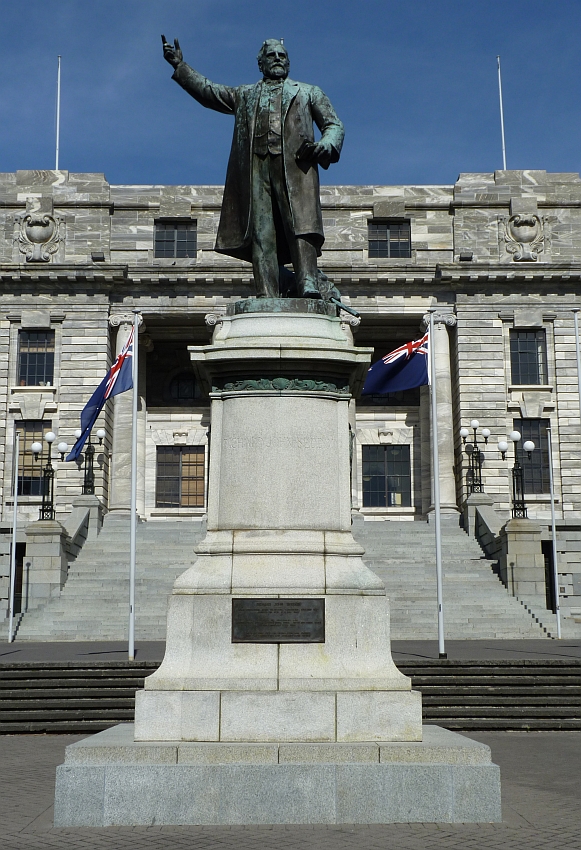
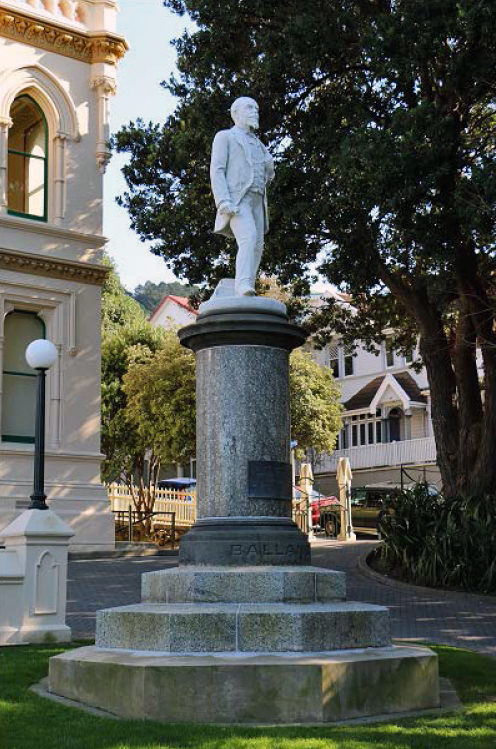
Restoration, refurbishment, and seismic strengthening of Parliament House; underground carpark, relocation of the Ballance Statue and Cook Bicentenary Plaque, new bridge between Parliament House and the Parliamentary Library
Start Year
1995
Type
Other
Description
Officially opened, for the first time, by Her Majesty Queen Elizabeth II
Start Year
2015
Type
Modification
Description
Steps connecting Parliament Grounds to the Cenotaph Memorial Precinct
Start Year
2019
Type
Addition
Description
Parliamentary Play Space
Start Year
2023
Type
Addition
Description
Te Kāhui Mōuri pou and mōuri
Start Year
1918
Type
Other
Description
The House of Representatives was first occupied in 1918
Start Year
1991
Finish Year
1996
Type
Modification
Description
Major renovations and strengthening (base isolators)
Construction Materials
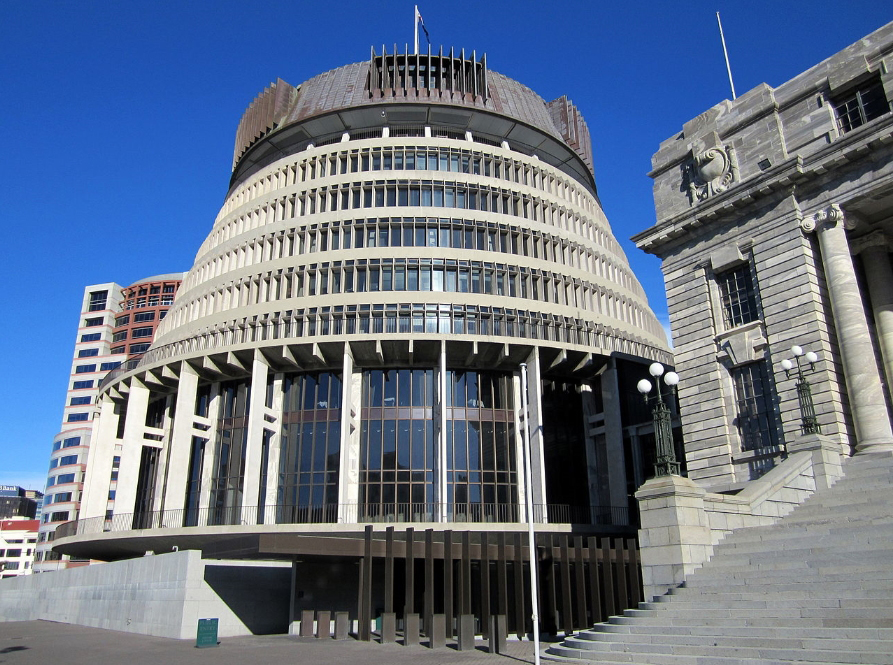
It was envisaged in 1911 that the construction of Parliament House would occur in two stages. The first stage was to be erected immediately and it is this portion of the design which stands today. The second portion of the building was to be erected at some later date when funds were available and the former timber Government House (adjacent to Parliament House) would, warrant replacement. The portion which was erected is brick and concrete, the two main facades being faced with marble. Construction of the first stage of Parliament House began in 1912. The foundations were laid by the Public Works Department and the Christchurch firm, Hansford, Mills and Hardie, won the contract for the superstructure with a tender of œ151,639. Although in 1912 the new Reform Government decided to omit the dome and cupola from the schedule of work for the first stage of construction the successful tender was nevertheless forty thousand pounds in excess of the sum stipulated in the competition conditions for that part of the building. There were also problems in the course of erecting the structure. Hansford, Mills and Hardie agreed to finish the building by December 1915 but the First World War prevented its completion until 1922. Just as critical, however, was the failure of the marble quarries in Sandy Bay, Nelson, to produce the large unfractured blocks that the Public Works Department required. As a result, a new quarry was opened at Kairuru, on Takaka hill, and a tramway constructed to the sea to transport the blocks to Wellington. The expense in procuring the marble (which it was claimed exceeded the cost of importing marble from Italy prior to the war) greatly increased the cost of the building. These spiralling expenses and the delay in completing the work led the contractors to charge that Campbell should not have specified a material which he could not be certain was available. The building should, they submitted, have been constructed in Mount Somers stone. Campbell had earlier called tenders for the construction of the building in that material but he never had any intention of accepting them. His sole purpose was to encourage lower tenders for marble from contractors who could not be certain which material the Government intended to use. The grandeur of the design should not, he thought, be compromised by the use of a less noble stone which would not last as long as marble. However, by the time the front and back elevations of the brick and concrete structure had been clothed in grey marble from Kairuru, its cost had risen to £445,687.17. The erection of the rest of Campbell's design (with the exception of the domes) was mooted in 1951. However, since the completion of the first stage in 1922 New Zealand architects had, like those in other parts of the Commonwealth, embraced modernism. It was also thought that the new building should reflect the spirit of the times, rather than that of the early twentieth century. Campbell's design was therefore discarded and a new Executive Wing, 'the Beehive', erected in a completely different architectural style.
Notable Features
A company called Modus Lighting created a bespoke lighting solution for Parliament in the early 1990s designing the fitting and importing special Venetian glass for the bowls. in 2016, again after considerable development, upgraded the heritage fittings to the latest generation LED reducing the energy and maintenance costs by 75%.
Construction Professional
Name
Hansford, Mills and Hardie
Type
Builder
Biography
Name
Mainzeal Group
Type
Builder
Biography
Name
Lincolne Scott
Type
Engineer
Biography
Name
Len Hetet
Type
Designer
Biography
Name
Sam Hauwaho
Type
Carver
Biography
Name
Campbell, John
Type
Architect
Biography
John Campbell (1857-1942) served his articles under John Gordon (c1835-1912) in Glasgow. He arrived in Dunedin in 1882 and after a brief period as a draughtsman with Mason and Wales joined the Dunedin branch of the Public Works Department in 1883. His first known work, an unbuilt design for the Dunedin Railway Station, reveals an early interest in Baroque architecture. In November 1888 Campbell was transferred to Wellington where in 1889 he took up the position of draughtsman in charge of the Public Buildings Division of the Public Works Department. He remained in charge of the design of government buildings throughout New Zealand until his retirement in 1922, becoming in 1909 the first person to hold the position of Government Architect. Government architecture designed under his aegis evidences a change in style from Queen Anne to Edwardian Baroque. His best-known Queen Anne design is the Dunedin Police Station (1895-8), modelled on Richard Norman Shaw's New Scotland Yard (1887-90). Among his most exuberant Edwardian Baroque buildings is the Public Trust Office, Wellington (1905-09). Although Campbell designed the Dunedin Law Courts (1899-1902) in the Gothic style with a Scottish Baronial inflection, he established Edwardian Baroque as the government style for police stations, courthouses and post offices throughout New Zealand. In 1911 Campbell won the nation-wide architectural competition for the design of Parliament Buildings, Wellington. Although only partially completed, Parliament House is the crowning achievement of Campbell's career.
Name
Studio Pacific Architecture
Type
Architectural Partnership
Biography
No biography is currently available for this construction professional
Name
Warren and Mahoney
Type
Architectural Partnership
Biography
The practice was founded in 1955 by Sir Miles Warren in Christchurch where he was later joined in partnership by Maurice Mahoney in 1958; the partnership went on to design buildings that are now regarded as the benchmark of New Zealand Modernism: Harewood Crematorium (1963), College House (1966), Canterbury Students' Union (1967) and Christchurch Town Hall (1972), are amongst many examples of their mid- to late-twentieth century works. Sir Miles was knighted in 1985 for his services to architecture and in 2003 named one of ten inaugural ‘Icons of the Arts’ by the Arts Foundation of New Zealand. Since 1979, the practice has expanded to Wellington, Auckland, Queenstown, Sydney and Melbourne, where they have nurtured some of New Zealand’s finest architectural talent. Sir Miles Warren and Maurice Mahoney retired in in the early 1990s. Currently, Warren and Mahoney is an insight led multi-disciplinary practice working across all disciplines of architecture. The practice has a long association with the refurbishment and restoration of historic buildings in New Zealand and has worked closely with Heritage NZ to achieve best outcomes for these heritage buildings while ensuring the highest possible standards of modern functioning requirements are met. They are conversant with the ICOMOS New Zealand Charter for the Conservation of places of Cultural Heritage Value and the Burra Charters for the conservation of buildings.
Name
Holmes Consulting Engineers
Type
Engineer
Biography
For Christchurch Town Hall 2015-2019
Name
Lawrence, Charles A.
Type
Architect
Biography
No biography is currently available for this construction professional
Name
Paton, Claude
Type
Architect
Biography
Claude Paton (1881 -1953) was born in Scotland and arrived in New Zealand in 1904. He received some architectural or draughting training in Glasgow which enabled him to gain employment with the Public Works Department in 1906 as an architectural draughtsman. Although Paton was never given the title of architect he was an influential force in the Department. He carried particular weight during the last decade of John Campbell's tenure as Government Architect; both were committed to the Edwardian Baroque style. Paton retired from the Public Works Department as a senior draughtsman in 1946.
Construction Details
Start Year
1911
Type
Designed
Description
The building was designed
Start Year
1912
Finish Year
1922
Type
Original Construction
Description
Construction began in 1912 and was completed in 1922
Start Year
1992
Type
Damaged
Description
Two fires on the third floor caused substantial damage
Start Year
1992
Finish Year
1995
Type
Modification
Description
Restoration, refurbishment, and seismic strengthening of Parliament House; underground carpark, relocation of the Ballance Statue and Cook Bicentenary Plaque, new bridge between Parliament House and the Parliamentary Library
Start Year
1995
Type
Other
Description
Officially opened, for the first time, by Her Majesty Queen Elizabeth II
Start Year
2015
Type
Modification
Description
Steps connecting Parliament Grounds to the Cenotaph Memorial Precinct
Start Year
2019
Type
Addition
Description
Parliamentary Play Space
Start Year
2023
Type
Addition
Description
Te Kāhui Mōuri pou and mōuri
Start Year
1918
Type
Other
Description
The House of Representatives was first occupied in 1918
Start Year
1991
Finish Year
1996
Type
Modification
Description
Major renovations and strengthening (base isolators)
Construction Materials
It was envisaged in 1911 that the construction of Parliament House would occur in two stages. The first stage was to be erected immediately and it is this portion of the design which stands today. The second portion of the building was to be erected at some later date when funds were available and the former timber Government House (adjacent to Parliament House) would, warrant replacement. The portion which was erected is brick and concrete, the two main facades being faced with marble. Construction of the first stage of Parliament House began in 1912. The foundations were laid by the Public Works Department and the Christchurch firm, Hansford, Mills and Hardie, won the contract for the superstructure with a tender of œ151,639. Although in 1912 the new Reform Government decided to omit the dome and cupola from the schedule of work for the first stage of construction the successful tender was nevertheless forty thousand pounds in excess of the sum stipulated in the competition conditions for that part of the building. There were also problems in the course of erecting the structure. Hansford, Mills and Hardie agreed to finish the building by December 1915 but the First World War prevented its completion until 1922. Just as critical, however, was the failure of the marble quarries in Sandy Bay, Nelson, to produce the large unfractured blocks that the Public Works Department required. As a result, a new quarry was opened at Kairuru, on Takaka hill, and a tramway constructed to the sea to transport the blocks to Wellington. The expense in procuring the marble (which it was claimed exceeded the cost of importing marble from Italy prior to the war) greatly increased the cost of the building. These spiralling expenses and the delay in completing the work led the contractors to charge that Campbell should not have specified a material which he could not be certain was available. The building should, they submitted, have been constructed in Mount Somers stone. Campbell had earlier called tenders for the construction of the building in that material but he never had any intention of accepting them. His sole purpose was to encourage lower tenders for marble from contractors who could not be certain which material the Government intended to use. The grandeur of the design should not, he thought, be compromised by the use of a less noble stone which would not last as long as marble. However, by the time the front and back elevations of the brick and concrete structure had been clothed in grey marble from Kairuru, its cost had risen to £445,687.17. The erection of the rest of Campbell's design (with the exception of the domes) was mooted in 1951. However, since the completion of the first stage in 1922 New Zealand architects had, like those in other parts of the Commonwealth, embraced modernism. It was also thought that the new building should reflect the spirit of the times, rather than that of the early twentieth century. Campbell's design was therefore discarded and a new Executive Wing, 'the Beehive', erected in a completely different architectural style.
Notable Features
A company called Modus Lighting created a bespoke lighting solution for Parliament in the early 1990s designing the fitting and importing special Venetian glass for the bowls. in 2016, again after considerable development, upgraded the heritage fittings to the latest generation LED reducing the energy and maintenance costs by 75%.
Historical and Associated Iwi / Hapū / Whānau
Completion Date
9th October 2023
Report Written By
Natalie Marshall and Peter Richardson
Information Sources
Alexander Turnbull Library
Alexander Turnbull Library, Wellington
Archives New Zealand (Wgtn)
Archives New Zealand (Wellington)
Auckland Star
Auckland Star
Cochran, 1989 (2)
Chris Cochran and Rod Cook, Parliamentary Library, Parliament House: Conservation Values, April 1989
Cook, 1988
Rod Cook, Parliament: The Land and Buildings from 1840, Wellington 1988
Dominion
Dominion, 16 Jul 1915, p. 9.
Evening Post
Evening Post, 27 Jun 1919, p.7.
Grey River Argus
Grey River Argus
New Zealand Parliamentary Debates
New Zealand Institute of Architects Journal
New Zealand Institute of Architects Journal (NZIA), No.8, Aug 1974
Otago Daily Times
Otago Daily Times, 1 Jun 1915, p.10.
Parliamentary Service Commission, 1996
Parliamentary Service Commission, To House Parliament: The Construction, Strengthening and Refurbishment of Parliament Buildings, Wellington, New Zealand, Wellington 1996
Progress
Progress
Richardson, 1997
Peter Richardson, 'Building the Dominion: Government Architecture in New Zealand 1840-1922', PhD thesis, University of Canterbury, 1997
Victoria University of Wellington
Other Information
A fully referenced copy of the upgrade report is available upon request from the Central Regional Office of Heritage New Zealand Pouhere Taonga This historic place was registered under the Historic Places Act 1980. This report includes the text from the original Building Classification Committee report considered by the NZHPT Board at the time of registration. Please note that entry on the New Zealand Heritage List/Rārangi Kōrero identifies only the heritage values of the property concerned, and should not be construed as advice on the state of the property, or as a comment of its soundness or safety, including in regard to earthquake risk, safety in the event of fire, or insanitary conditions.
Historical and Associated Iwi / Hapū / Whānau
Completion Date
9th October 2023
Report Written By
Natalie Marshall and Peter Richardson
Information Sources
Alexander Turnbull Library
Alexander Turnbull Library, Wellington
Archives New Zealand (Wgtn)
Archives New Zealand (Wellington)
Auckland Star
Auckland Star
Cochran, 1989 (2)
Chris Cochran and Rod Cook, Parliamentary Library, Parliament House: Conservation Values, April 1989
Cook, 1988
Rod Cook, Parliament: The Land and Buildings from 1840, Wellington 1988
Dominion
Dominion, 16 Jul 1915, p. 9.
Evening Post
Evening Post, 27 Jun 1919, p.7.
Grey River Argus
Grey River Argus
New Zealand Parliamentary Debates
New Zealand Institute of Architects Journal
New Zealand Institute of Architects Journal (NZIA), No.8, Aug 1974
Otago Daily Times
Otago Daily Times, 1 Jun 1915, p.10.
Parliamentary Service Commission, 1996
Parliamentary Service Commission, To House Parliament: The Construction, Strengthening and Refurbishment of Parliament Buildings, Wellington, New Zealand, Wellington 1996
Progress
Progress
Richardson, 1997
Peter Richardson, 'Building the Dominion: Government Architecture in New Zealand 1840-1922', PhD thesis, University of Canterbury, 1997
Victoria University of Wellington
Other Information
A fully referenced copy of the upgrade report is available upon request from the Central Regional Office of Heritage New Zealand Pouhere Taonga This historic place was registered under the Historic Places Act 1980. This report includes the text from the original Building Classification Committee report considered by the NZHPT Board at the time of registration. Please note that entry on the New Zealand Heritage List/Rārangi Kōrero identifies only the heritage values of the property concerned, and should not be construed as advice on the state of the property, or as a comment of its soundness or safety, including in regard to earthquake risk, safety in the event of fire, or insanitary conditions.
Current Usages
Uses: Government
Specific Usage: Parliament House
Themes
Rainbow List
Web Links
description: Desribes the strengthening work undertaken in 1992-1995
description: History of Parliament building and grounds
Current Usages
Uses: Government
Specific Usage: Parliament House
Themes
Rainbow List
Web Links
description: Desribes the strengthening work undertaken in 1992-1995
description: History of Parliament building and grounds
Location
Related listings


Stay up to date with Heritage this month